hands immersed in black soil
Okay, I have a secret to share.
Are you ready?
Are you sure you’re ready?
I enjoy the benefits of gentrification.
To an extent, okay?
I enjoy having access to my PureBarre classes and acai bowl immediately after, all within a fifteen-minute walk from my apartment. I really do. The thing is, I don’t feel comfortable knowing that this leisure comes at the cost of pushing out native residents of a [insert a random city name here]. Oftentimes, these residents are Black people and other people of color who face the brunt of this exile. This redevelopment of Black populated areas is typically referred to as “urban renewal”, a component of environmental racism where the city is focused on the remodeling and replacement of old buildings, homes, and neighborhoods. It isn’t just large metropolitan cities that are experiencing this. No, smaller towns are widening their city limits and pushing out their residents. What’s in place of these communities? A Trader Joe’s? “Luxury” apartments with a rat infestation? Or a series of shopping centers that attract people of a higher income while the decreasing middle class is rebuffed? Sure, it sounds nice, but is it really worth it if we cannot afford it?
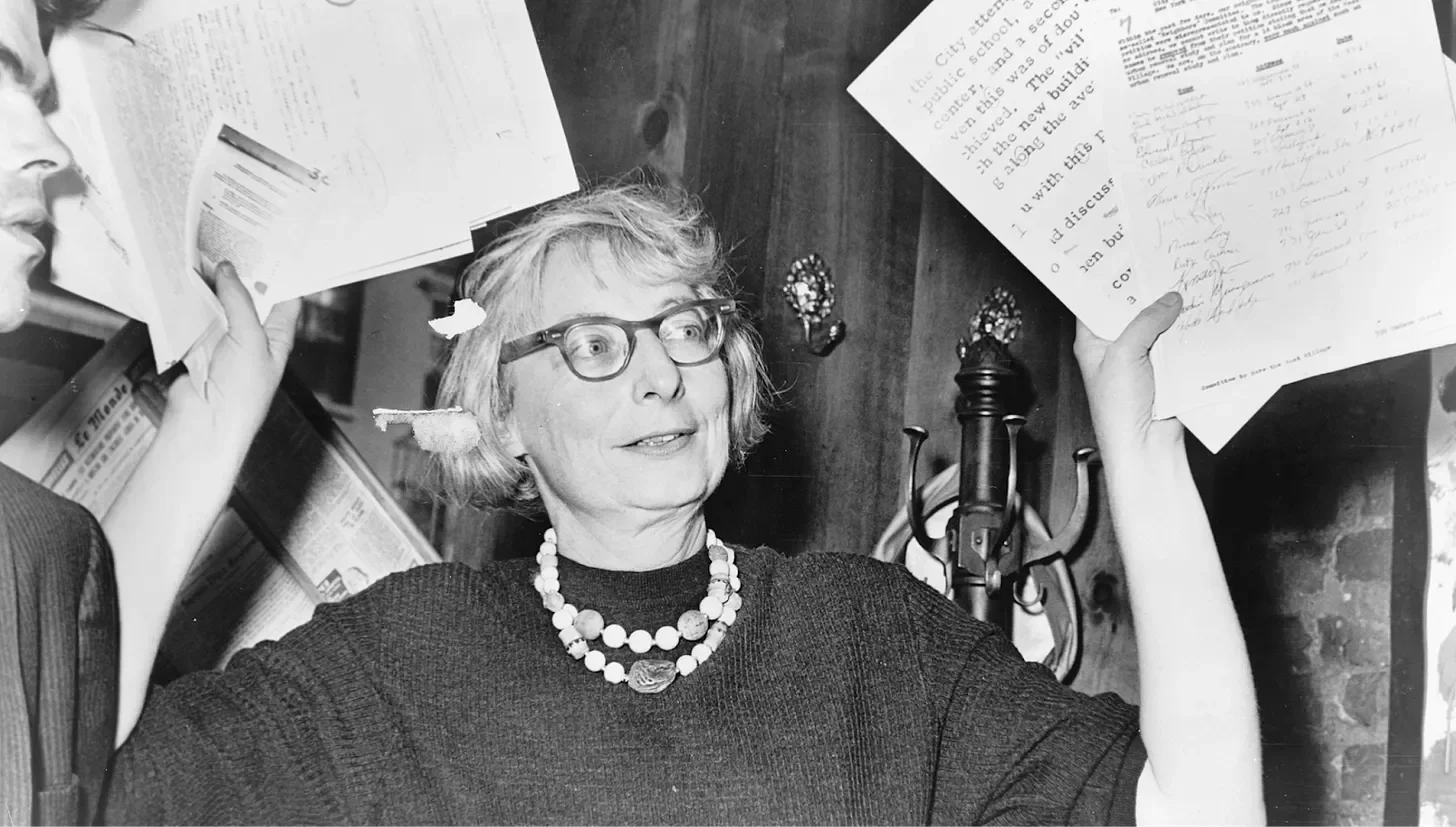
One of my favorite geographers, Jane Jacobs, wrote about these dangers in The Death and Life of Great American Cities (1961). An activist and journalist, Jacobs influenced urban design through her theories and writings on the harms of Urban Renewal for marginalized communities and its impact on community engagement. She once advised–and this is not verbatim– that every day, people must go out into their neighborhood and see what it is their community needs. To look at the homes, the stores surrounding them, and compare them to other neighborhoods. Where are the playgrounds? How close are the liquor and tobacco stores in comparison to the grocery stores? What is at the grocery store? Is there an influx of light or air pollution? Are there sidewalks? These are the questions to consider when determining what could be done to improve your neighborhood and the quality of life for its residents. Not wondering how a city can strengthen its economic value through the demolition of citizens and deforestation, but rather utilizing its community and ensuring those in it are thriving.
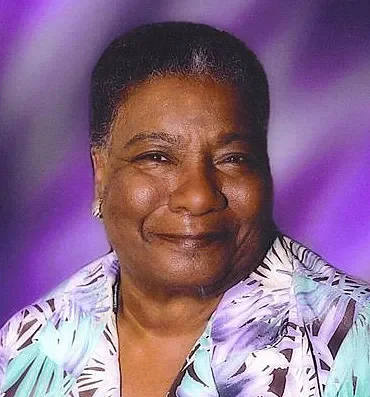
That’s why I respect Hazel M. Johnson so deeply. Known as the “Mother of Environmental Justice”, Hazel drew on her personal experiences living on the South Side of Chicago to create educational and improvement opportunities for herself and her neighbors, primarily in the 1970s and 1980s. As a young woman, Hazel found that her neighborhood was built on a toxic waste landfill that contributed to several health issues, such as high rates of cancer, foul smells, asbestos, and high respiratory issues in children. The quality of water and air was significantly poor as it was contaminated with pollutants from the landfill. Hazel lost not only her husband, but also plenty of neighbors and close friends due to the horrendous conditions the Altgeld Gardens community endured. Due to the neighborhood’s living conditions and its impact on residents, Johnson was led to establish the People for Community Recovery in 1979.
During its first seven years, PCR assisted in the formation of Citizens United to Reclaim the Environment (CURE), a coalition of five grassroots organizations in southeast Chicago. CURE would conduct protests to bring about change, like physically using their bodies to block entrances to landfills, even if it led to being arrested. Or they would lobby for environmental justice in adjacent neighborhoods to ensure the safety of Black residents. This hard work and dedication led to the creation of Executive Order 12898, “Federal Actions to Address Environmental Justice in Minority Populations and Low-Income Populations.”, allowing Hazel M. Johnson and PCR to be nationally recognized as a top 100 environmental group by President Clinton, making PCR a household name.
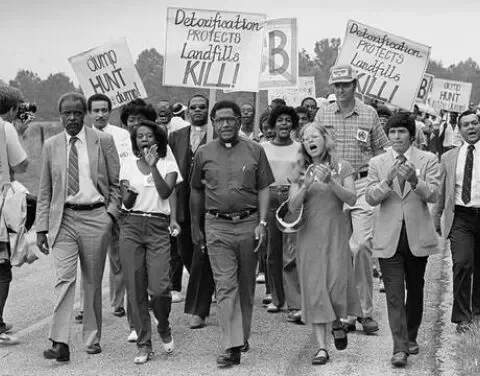
The People for Community Recovery continues to fight the good fight for environmental justice through a focused fight for community aid, educational training, economic development, and healthy and affordable housing initiatives. PCR is one of many grassroots organizations that focus on the well-being of Black populated areas, and its work has inspired many more to uplift and continue to build their homes to ensure a healthy and sustainable environment.
Even with Johnson’s success in environmental activism, Black women make up less than 3% of the field; with environmentalism being a white dominated field, it is imperative that the work that is being done for communities of color—and the Earth— must be reflective in its stewards. In the United States, people of color are 28% more likely to have higher health risks due to environmental conditions. Meanwhile, Black people at large are 54% more at risk in comparison to the general population, according to a 2018 report from the Environmental Protection Agency (EPA).
If Black people make up over half of the whole who are impacted, yet are underrepresented in ensuring their safety, who are the ones dedicating the time to do so? And if so, what are they doing, and where are they?
Who is in the field currently, and what are they doing?
The following section is an interview with three Black women environmentalists, their work, their educational pursuits, and their experience so far in the field of environmental justice.
Inspired by her father and his background in physics, Alana Petifer pursued a career in environmental science due to its connection and regard to human life. She is an alumna of both North Carolina Central University and Georgetown University as a member of the inaugural cohort for the Master’s degree in Environment and International Affairs. Alana currently works in the environmental justice advocacy space and is passionate about developing inclusive, sustainable practices in all areas of life, from fashion to policy.
Our second environmentalist is Loren Caldwell. Loren often saw her mother’s passion for the environment through acts such as recycling, protecting the grass to reduce erosion, and being as sustainable as possible. Moments such as these are what she carries in her personal life and work to push for equity, awareness, and real change. She obtained her Master’s in Global Studies from UNC Chapel Hill, where her research focused on Afro-Panamanian resistance to environmental racism, particularly regarding waste.
Lawren Caldwell is an environmentalist who recently graduated from North Carolina A&T State University. Her master’s thesis, “An Analysis of Pro-Environmental Behaviors as Held by Undergraduate Members of Black Greek-Letter Organizations,” demonstrates her interest in understanding how communities address environmental challenges. As an undergraduate research assistant, she investigated issues such as food insecurity, health inequities, and environmental justice, which inspired her dedication to community health and environmental equity. She eventually worked with the North Carolina Black Alliance as an Environmental Justice fellow, where she saw the effectiveness of a grassroots organization. Now, Lawren is an agriculture education teacher, increasing representation in agricultural spaces and advocating for low-income minority communities to ensure fair treatment and meaningful participation in environmental decision-making.
What first inspired you to pursue a career in environmental science?
AP: Science was always my favorite subject in school, and earth science was one of the most interesting subjects to me because I thought it was the most important regarding human life.
LoC: I stumbled upon the environmental science field accidentally. While I have always had a passion for environmental protection, initially due to my mother’s interest in sustainability, I did not consider the field until my senior year of college. I came across an internship working for a climate resilience and conservation non-profit in Asheville, North Carolina, that solidified my interest. That summer changed my life and affirmed my desire to care for our planet in some manner.
LaC: Growing up in the south, I’ve always felt connected to my environment. I loved to be outside and embrace my surroundings; it made me feel grounded. I also had an appreciation for holistic wellness, which made me want to become more knowledgeable about the benefits of our resources. Naturally, I took an interest in the environmental sciences and decided to further my understanding of natural resources and how people impact the environment.
What were your educational pursuits like?
AP: I was fortunate enough to have been in a dual enrollment program in high school, and because I was taking college classes, I chose my major. I met someone who would eventually become my department chair and advisor while I was in high school. Building a connection with professors helped me greatly, especially because our department was so small. Going into a master’s program was a big transition, but I was able to connect with people from different backgrounds, which helped me flourish.
LoC: I pursued a BA in International Studies and Spanish with a minor in Women and Gender Studies. Recently, I earned a Master’s in Global Studies. I chose these fields because they are broad and interdisciplinary. I was able to pursue my interests in topics such as environmental racism and climate change while also focusing on international displacement and women’s issues that are impacted by the environment.
LaC: Attending North Carolina A&T shaped my interests and helped me discover my passion for environmentalism. Working as an undergraduate research assistant, I discovered topics like food insecurity, health disparities, environmental justice, and more. It sparked my interest in community health and environmental equity. After discovering my interest in environmentalism, I worked for the National Wildlife Federation that following summer and saw the impact of grassroots organizing. Ever since, I’ve made it my mission to educate and advocate for low-income minority communities to promote fair treatment and community involvement in environmental decision-making.
What has your experience been like navigating a field where Black women are often underrepresented?
AP: I’m fortunate enough to have a very positive experience, coming from a HBCU I was surrounded with black women in STEM which helped me build my confidence and they were able to help me build my confidence. When I transitioned to graduate school, I was one of two Black women in my program, but I was able to stay confident in my abilities and knowledge. A lot of young black women experience imposter syndrome and or feel like they’re not enough, but stay vigilant and confident that you are needed in these spaces and you are enough.
LoC: Truthfully, I have found it challenging to navigate a field and spaces where I am often underrepresented. To deal with the uncomfortable feelings that may arise from this experience, I am always transparent with my supervisors about the lack of diversity and ensure that I find community with other Black women outside of these spaces.
LaC: At A&T, the Department of Natural Resources and Environmental Design is housed within the College of Agriculture, and agriculture is a very white-male career field. Black farmers make up about 1 percent of the current grower population. Agricultural spaces are harder for me to navigate as a young black woman. Some people may treat you as if you are undeserving or as if you don’t belong. My personal experience has been navigating unconscious bias and microaggressive behaviors from my colleagues. It can be very challenging, and I often feel misunderstood, but I have to remember that I am in these spaces for a reason and I am doing the work I was called to do. I have to work hard not to allow how I’m treated to become my reality or a reflection of how I view myself.
What accomplishment are you most proud of in your career so far?
AP: At this moment in time, it is that I’m completing my Master’s degree in Environment and International Affairs. I was a part of the inaugural cohort for this degree at Georgetown University, and I get to be a part of setting the standard of what alumni from this program can and will do.
LoC: Thus far, I am most proud of my research during graduate school that culminated in my thesis: “Afro-Panamanian Placemaking and Resistance at the Site of Racialized Waste Geographies.” I put forth a lot of effort to ensure that my work was thorough, including visiting Panama to witness what I purported to be true. Defending my thesis, along with graduating in May 2025, are two of my proudest moments.
How has your work shaped your personal relationship with the environment?
AP: I currently work in the activism and non-profit space, and it’s shaped my experience because working with science can be straightforward, but working in communities can be challenging. What I have learned overall is that every individual and community has a unique relationship with the environment. Some are engaged and aware of that relationship, and others are not engaged, but it doesn’t change that the human-environment relationship is important.
LoC: My work has solidified my personal care for the environment. It is extremely difficult to research the harms to our planet while actively contributing to that harm. I have been an “eco-minimalist” for about six years and will continue to mitigate the harm I cause to the environment.
How do you balance bringing your full identity into your work in spaces that may not always feel welcoming?
AP: If I don’t feel like my identity is welcome, I still look for opportunities to represent myself authentically, and I don’t give up on being myself.
LoC: I decided about four years ago, during my first jo,b that I would show up in every space authentically. I strive not to code-switch, while keeping things appropriate, of course. I do this for my own sanity. It is difficult to turn yourself off every single day; I imagine that can’t be healthy for your psyche. Instead, I choose to be myself, acknowledging that I cannot control the reaction that may come as a result.
What changes would you like to see institutions and organizations make to better support Black women in the field?
AP: I would like them to honor and defend black women in the same way they are trying to honor and defend the environment. How we engage with each other reflects how we engage with the environment, and in a world of sexism, racism, and overall dehumanization, it’s no wonder that our environment is in danger.
LoC: I am a fan of diverse required reading. It would be beneficial if institutions and organizations encouraged reading about Black women in environmental science and/or how environmental science can better support Black communities. This would ensure that there is an understanding of Black women in the field, which can lead to enhanced support.
How do you envision the future of the environmental science industry for women of color?
LoC: I envision the future of the environmental science industry as a place where women of color are no longer viewed as minorities or the exceptions to the rule. I hope that one day, women of color will be viewed as a natural and beneficial addition to the environmental science field.
These women profoundly stated the importance of their role as Black women in the environmental justice sector. What struck me most was the fearlessness to be audacious while occupying the spaces they are in. In a world where Black women and their communities are under attack, it is vital not to minimize your abilities and presence; if anything, now is the perfect time to carry the audacity at the same level as the oppressor. Under the current Trump Administration, Black women have experienced the brunt of the federal layoffs as a result of the removal of diversity, equity, and inclusion (DEI) policies, restricting most people’s access to health care and economic stability. In addition, environmental programs and policies have been removed, like the Paris Climate Accord1, enabling a laissez-faire government, and creating higher health risks for Black people, especially. African Americans are 75% more likely than other minority groups to live near hazardous waste facilities. In states like Pennsylvania, where 38% of Black Americans live within a county where there are oil and gas refineries, the removal of environmental policies and elimination of environmentalists (at all levels) increases health issues like asthma, for example, and increases the mortality rates nationwide, increasing the premature deaths of Black Americans.
The combination of policy rollbacks and the reduction of Black employees not only strengthens discrimination in the workplace but also weakens representation for the underserved and puts their health at risk! It is up to us to stand up and put our best interest forward and create solutions during a time where it feels the options to survive are slim to none.
One person who is getting their hands dirty is Ariel Mial, a North Carolina Central University alumna, Environmental Engineer Tech, and the founder of Black Soil. Black Soil is an environmental platform and guide to live a more sustainable lifestyle. Black Soil intends to guide and educate communities of color about environmental problems and sustainable practices as a solution to combat the racist system and to increase communal support. Beginning in May of 2023, Mial has dedicated the last two and a half years to encouraging minority voices by hosting in-person events and social media campaigns to connect with her community both physically and digitally (the Instagram is @BlackSoil.am). From park clean-ups to creating affordable and sustainable shopping lists, Ariel has shown that immersing your hands in black soil not only strengthens our community but can restore the environment that we cherish and love while opening our minds to a sustainable way of living.
No action is too small, and nothing of greatness happens overnight. Through time, intention, and collective effort, we can strive for greatness. Working to combat and provide support for marginalized groups does not always have to result in working within the government system. Creating art, grassroots organizations, within education, or simply providing for a neighbor does significant damage. Do not wait for someone to give you back your power when you never permitted them to steal it. So, I leave you with this: how are you going to reclaim your spot in the world? And is the overpriced iced coffee really worth it?
Resources
Beaudouin, W. (2025, August 18). Trump’s Agenda Is a Direct Threat to the Black Middle Class. Center for American Progress. https://www.americanprogress.org/article/trumps-agenda-is-a-direct-threat-to-the-black-middle-class/
Beth. (2018, October 6). Hazel M. Johnson, “Mother of the Environmental Justice Movement.” Www.chipublib.org. https://www.chipublib.org/blogs/post/hazel-m-johnson-mother-of-the-environmental-justice-movement/
Cole, C. (2025, September 29). Why are so many Black women losing their jobs? An expert blames three factors. Cbsnews.com. https://www.cbsnews.com/boston/news/black-women-unemployment-rate/
Cornelius, J. (2020, July 20). The Racist Placement of Power Plants in Pennsylvania. Climate-XChange. https://climate-xchange.org/2020/07/the-racist-placement-of-power-plants-in-pennsylvania/
Fernandez, M. (2024, October). What Project 2025 Means for Black Communities: Environmental Justice. The Thurgood Marshall Institute at LDF. https://tminstituteldf.org/environment-project-2025/
Frye, J. (2025, August 19). 5 Ways the Trump Administration is Eroding the Economic Stability of Black Women and the Pathways Used by Black Workers to Move Into the Middle Class | National Partnership for Women & Families. National Partnership for Women & Families. https://nationalpartnership.org/5-ways-trump-administration-eroding-economic-stability-black-women-pathways-middle-class/
Nast, C. (2022, April 22). All My Environmental Heroes Are Black Women. Vogue. https://www.vogue.com/article/all-my-environmental-heroes-are-black-women
Priority Programs - People for Community Recovery. (2021). People for Community Recovery. https://www.peopleforcommunityrecovery.org/our-work/priority-programs
The Climate Reality Project. (n.d.). Environmental racism. The Climate Reality Project. https://www.climaterealityproject.org/environmental-racism
Ukenye, J. (2021, July 7). https://www.pennfuture.org/Blog-Item-More-than-Skin-Deep-Environmental-Racism-Justice-and-Pennsylvania. Www.pennfuture.org. https://www.pennfuture.org/Blog-Item-More-than-Skin-Deep-Environmental-Racism-Justice-and-Pennsylvania
Villarosa, L. (2020, July 30). Pollution Is Killing Black Americans. This Community Fought Back. New York Times. https://www.nytimes.com/2020/07/28/magazine/pollution-philadelphia-black-americans.html
The PCA was created with the intention of regulating and reducing climate change. As Black people in the United States live in “heat islands” (areas near sources of pollution and are hotter in temperature due to the lack of shading and trees), the emissions from industrial plants were reduced and regularly monitored to reduce environmental hazards. Hazards such as heat strokes and extreme weather conditions like flooding, hurricanes, and extreme heat.
