Division is not just for mathematics
I’ve been watching The Gilded Age on HBO Max and am excited for the new season to come out. If you aren’t familiar, here’s a quick synopsis: The Gilded Age is a historical drama set in New York during the Gilded Age era of the United States. Think Vanderbilt, railroads, the emergence of steel, and factory work. Some characters are historically accurate, such as Caroline Astor, a reflection of the socialite of the same name who ruled New York. While other characters, like George and Bertha Russell, are a play on Alva Vanderbilt and Jay Gould. There are other notable figures in New York society, but not as directly linked/represented. Not only does the show examine the interconnectedness of New York’s infamous 400 list, but it also does an exceptional job at exploring the ever-evolving life of Black Americans post-Civil War.
My intention with this piece is not to dissect the intricacies of the show itself, but rather to examine and break down the themes showcased and how they have influenced our culture in modern times. The major theme I have noticed and have been reflecting on most is this desire to get rich and maintain that wealth to establish oneself in society. The entirety of the show recycles this argument of Old Money vs. New Money, at least for the white folx. There’s this argument and almost damnation in which the money isn’t legitimized if it hadn’t been established before the Civil War.
Old money was established through slavery, fur trading, and real estate. The New Money had been established through the railroad industry, the textile and manufacturing industries, such as steel, and banking. As the industries were new, onlookers became skeptical of those weaseling their way into society, and the wives fought hard to cement themselves amongst the 400. New Money was not considered reliable enough for the rich to marry off their children to the wealthy, so while the new wives fought tooth and nail for their parties to have attendees, they also had to find ways to keep their money long-term.
Rich people marry rich people, but the old money was not keen on fusing their wealth with people who just made their money yesterday. It wasn’t stable enough to risk their family name for a group of people who threw a good shindig. This is when we start to see the implementation of the “Dollar Princess,” where young women of New York’s (newly) finest were being married off to Dukes and British nobility to maintain their riches, as they were excluded from society otherwise.
So that’s the historical context from the other side of the tracks. It is rather riveting and juicy how Mothers pimped out their daughters to remain invited to tea, but what I’m most interested in is how the Black people made themselves relevant in society when all was new to them.
In The Gilded Age, the show follows a young Black journalist named Peggy Scott who finds herself not only working for the Van Rhijn family but also working to uncover stories about racial tensions in the South, as well as working to unite women of color and white women to fight for feminist issues. As her storyline continues, we watch her fall in love and fight against the respectability politics that are imposed on (younger) Black women while simultaneously combatting colorism and classism.
You see, Peggy is a dark-skinned Black woman with a brown-skinned mother and a dark-skinned father who is believed to have escaped the South before emancipation. Her father, Arthur, went to school and opened up a Pharmacy to make something of himself. One would say he did an exceptional job considering where he first began in life, yet his background and physicality leave room for judgment from other Black folk of a lighter complexion.
Black people can be extremely classist and often colorist— but it’s because of the white gaze. I mean, what isn’t? As freed slaves migrated North for a better way of life, the hierarchy began to be placed as a form of division. White people initially couldn’t fathom the idea of Black people at large having manners, showcasing wealth, and advancing themselves through education or financial matters. So Black people showed them off. They were indignant at being the object of a spectacle, so they wanted to make it a point to never affront the white man. Think about it— how many times have you heard an older Black person state that you shouldn’t walk out of the house with a bonnet on or to be sure to look “presentable” to avoid giving white people something to talk about? To not give in to the stereotype? To code-switch in their presence? Or even being told you “talk white”? It all predates the Gilded Age, but took form as the Black identity began to come into question.
It’s interesting, the juxtaposition. While white folk were unionizing and protesting against millionaires, Black people were striving to catch up and creating their own aristocracy. They became affluent and educated people. Business-savvy and charismatic people who looked down on those who may have found a living doing blue-collar work and were just happy to not have been enslaved, or who still resided in the South.
It’s a catch-22, really. Black people who escaped the South were in search of this new reality that gave them autonomy and the ability to live freely, to make something of themselves. While Black Northerners looked down their noses and found Southerners a liability, and possibly jeopardized the work and the class that was curated.
Confused? Think of the Jack and Jills of America.
The Black debutants and elites who are the poster children of what a “good Negro” ought to be like. They aren’t threatening to the white man because they have studied the white man. They see what is considered acceptable by those who created this patriarchal society and adhere to it through respectability politics. Sacrificing the eroticism channeled by the challenging persona and Spirit of African Americans to be well-liked and still racially discriminated against. Our Aunties who permed our hair at 5 years old because it wasn’t manageable and would hope to pass the paper bag test still uphold these standards today.
And you know what? They aren’t very different than the niggas who would post a money spread on Instagram.
And let me tell you why: both are striving for the acceptance that was indoctrinated by a patriarchal and capitalist standard.
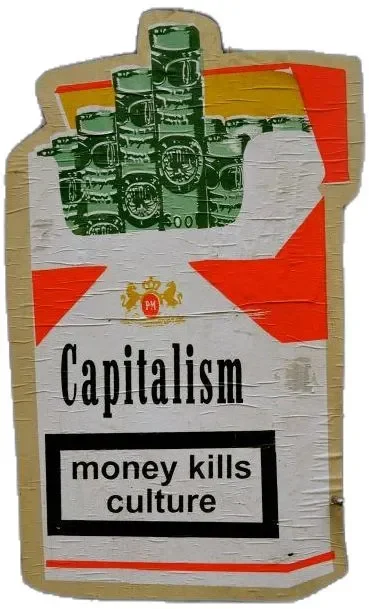
To this day, Black people are striving to make millions and billions. I have seen numerous social media posts and even responses from children I used to teach, whose goal is to be the first billionaire in their family. I want to be completely clear—I reject the idea of having to hoard so much money that I have more than 98-99% of the global population. And it isn’t even just Black people; I’ve noticed it’s all people who are striving for this. We used to be a proper country that terrified the wealthy by abstaining from work, rioting, and demanding that they utilize their money in ways that would benefit the middle class. How do you think we got Carnegie Hall?
Now, we are congratulating celebrities on their Instagram posts for officially becoming billionaires as if they’re gonna let you hold $201.
Jay-Z recently spoke with GQ magazine about the morality of being a billionaire and believes we should condemn the system rather than the individual who was able to hack the system. And I get it. To some degree, I agree.
I have a respect for Jay-Z as an artist because he’s constantly trying to maintain the culture and true essence of hip-hop. He’s never been one to shy away from direct conversations about what does and does not make hip-hop so authentic and its contributions to the Black American experience. My disdain comes from him being a capitalist– he understands the system for what it is and embraces it. Unfortunately, that also means that he doesn’t practice how the system could be. He makes donations and conducts philanthropic activities that present well, just for the tax breaks, but doesn’t directly attack issues such as poverty. He invests, doesn’t speak on politics, nor influence it. But he’ll put his opinions in his music, so he can profit from it.
He isn’t the only celebrity to hack the code: Selena Gomez, Taylor Swift, Beyoncé, and Rihanna popularized it. Even Megan Thee Stallion is on the same trajectory with her current business endeavors. Constantly referencing being in love with money and wanting to maintain wealth. Her foundation, Pete & Thomas, is an incredible business venture that gives back to the community, no doubt, but the non-profit industrial complex proves that this will be a major tax break for Megan in regard to taxes and maintaining her wealth.
I know the United States is facing the repercussions of late-stage capitalism— where corporations are dominating politics that influence the everyday man— creating class inequities on top of racial and gender discrimination. It is easy to be divisive and to turn our backs against those who may need it most. The implementation of racism, sexism, ageism, and any other -ism you can think of has been utilized as a distraction tactic against what truly matters. And that’s fighting against a government that has abandoned us and our rights. This isn’t to negate the -ism’s as malarkey, because they were ingrained in the creation of this nation and must be dealt with; but this is to bring into focus that the longer we stay divided, the longer we stay distracted. And the more they get away with.
Currently, across the United States, poor white people, Black people, immigrants, women, and children alike are experiencing so much hardship. The current Trump administration is choosing to ignore the dangers of AI data centers, the teachers who are leaving classrooms, and cancelling late-night talk shows because their hosts are using their right to free speech to condemn this atrocity. This administration has cut programs to assist areas that are impacted by natural disasters and cut programs that were created to predict when these disasters will occur. Asheville, NC is still recovering from Hurricane Helene.
So yes, Jay-Z is right. As a collective, we should condemn the system and fight against it. In the same breath, we should hold those whom we give our money to, and have the power to end poverty, and influence legislation with the money we give them, to a higher standard.
Withhold your money. It’s only a matter of time until the pendulum swings back.